The most common mistake
Stuffing keywords into the iOS long description on the assumption it helps search — Apple does not index it for search at all; it's read-only copy for the human visitor. The reverse mistake happens on Google Play, where the long description IS indexed and under-using it leaves indexed space empty.
App Store metadata vs Google Play metadata
| Field | App Store (iOS) | Google Play |
|---|---|---|
| App name / title | Indexed · 30 chars | Indexed · 30 chars |
| Subtitle | Indexed · 30 chars | — |
| Short description | — | Indexed · 80 chars |
| Keyword field | Indexed · 100 chars, invisible to users | — |
| Long description | Not indexed | Indexed · 4,000 chars |
| Developer name | Indexed | Indexed |
The practical consequence: on iOS your search budget is the name, subtitle and keyword field, and the description is written purely for people. On Google Play the description is part of the search budget and has to carry the terms in real sentences.
Text metadata vs visual assets
The icon, screenshots and preview video are also part of a listing, and are sometimes called visual metadata. They are not read as search text; their job is conversion — turning the people who see your result into installs. Text metadata decides whether you appear for a term; visual assets decide whether the searcher taps.
How to change metadata and measure the effect
On iOS, the name, subtitle and keywords can only be changed with a new version submission, so each change is a release. On Google Play, listing text can be edited without a new build, though changes still go through review.
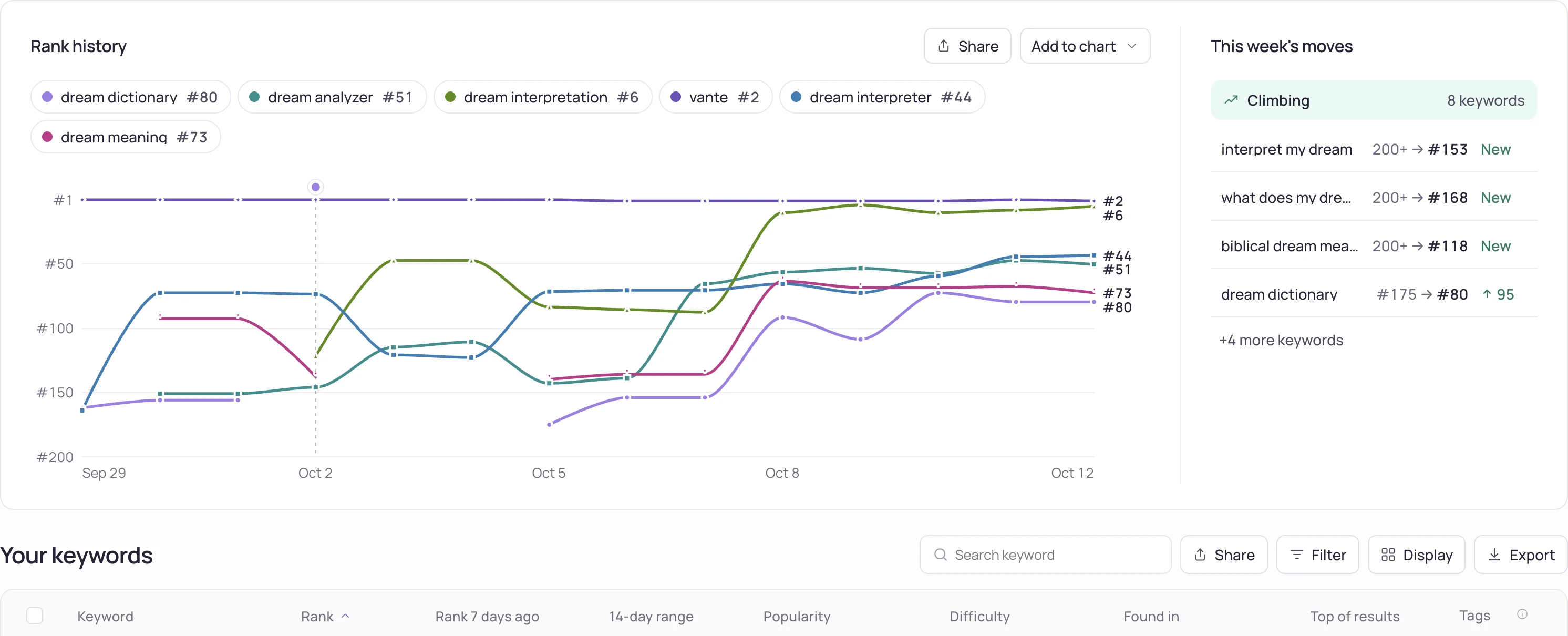
Change one field at a time where you can, note the date, and watch rank tracking for the terms you touched over the following days. A rank change on the day of a metadata update is a plausible cause, not a proven one. Storelift's metadata studio audits which tracked terms your current fields cover before you change them.
Localized metadata and language slots
Every language slot of a listing carries its own name, subtitle, keyword field and description. A word written in the Turkish slot does not enter the English slot's searches — but one storefront can index more than one slot, so a second slot is extra indexed space, not only a translation.
That makes an empty slot a measurable loss in the storefronts that read it. Which storefronts read which slots, and what planning per storefront looks like, is covered in ASO localization and Storelift's localization view.
Frequently asked
What is app store metadata?
The text attached to an app's store listing — name, subtitle or short description, description and, on iOS, the keyword field. The stores index part of it for search.
Does the App Store index the app description?
No. On iOS the long description is not indexed for search. Google Play does index its long description.
Which metadata field matters most for ranking?
The app name or title is generally treated as the strongest field in both stores; on iOS the subtitle and keyword field follow, on Google Play the short and long description.
See this for your own app
Paste your store link, add your keywords. Rank, the apps above you and demand are measured every day.
Free plan: 1 app, 25 keywords in each of 2 storefronts, 30 days of history, no card, no end date. Pro is $20/mo.
Start free →