What reads cleanly from outside
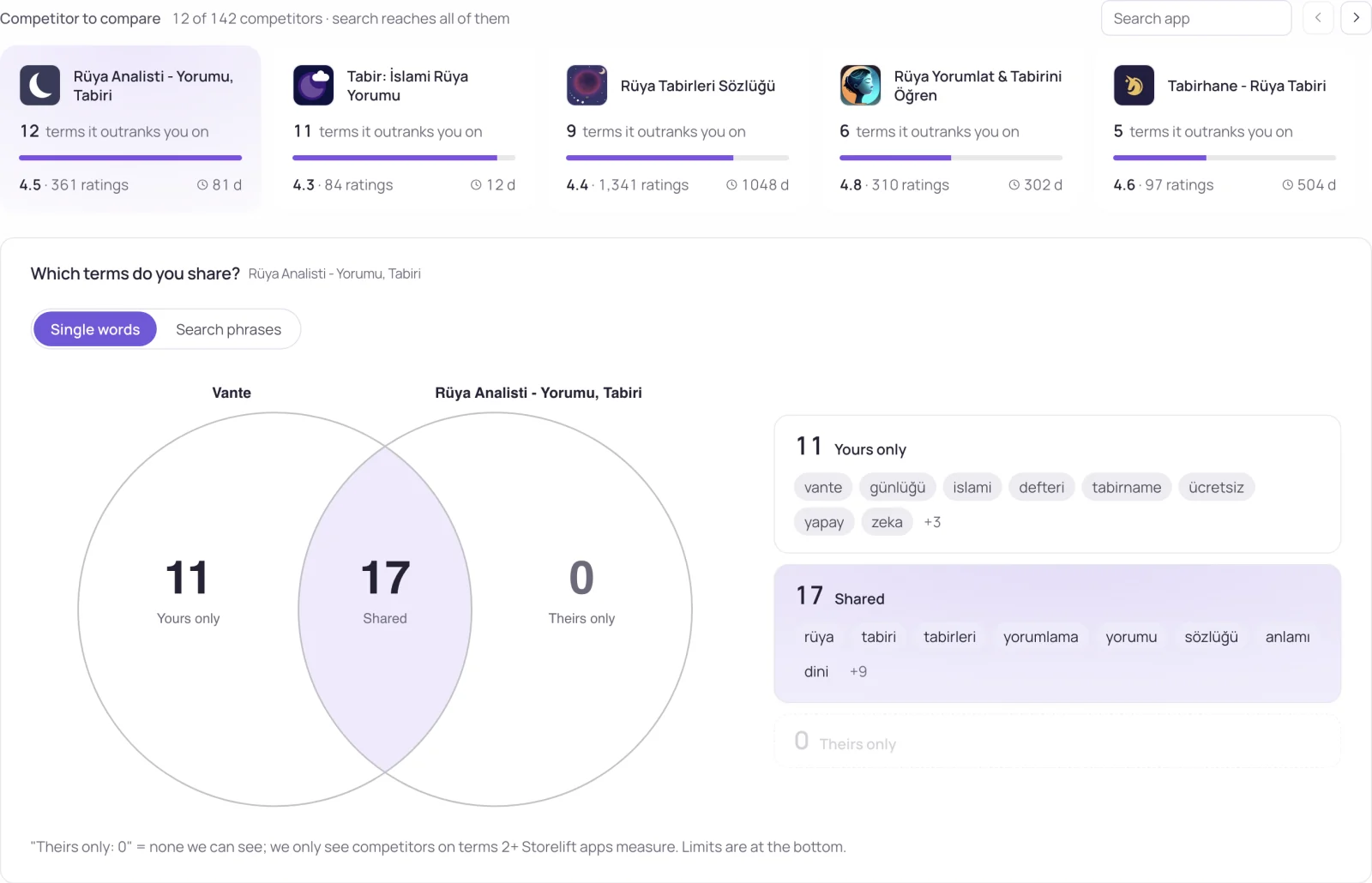
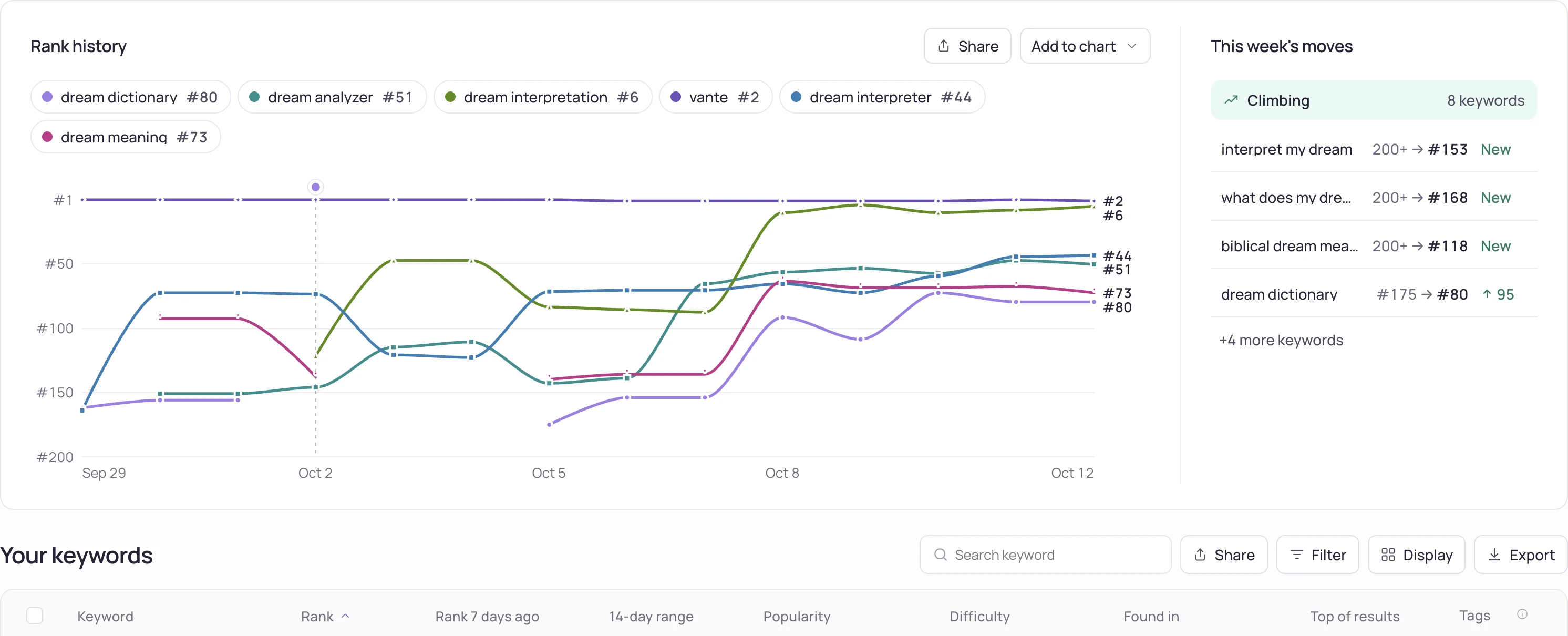
The stores report an organic/paid split internally, in App Store Connect and Play Console — that split isn't visible to anyone outside your own account, including a competitor. What's measurable from outside is upstream of installs: rank, and whether a term is searched at all.
On Google Play a rival's exact install count sits on its public listing; the App Store shows none, and Storelift's App Intelligence gives the figure.
Where organic installs come from
- Store search — someone types a term and taps your result. This is the part ASO influences most directly, through rank and conversion rate.
- Browse — top charts, category lists and editorial placements inside the store.
- Referrals — a link on a website, in another app or in a message that leads to your listing.
Both stores break installs down by source inside your own account: App Store Connect's App Analytics separates search, browse and referrer traffic, and Play Console splits store listing acquisitions by traffic source. Neither breakdown is visible from outside your account.
Organic vs paid installs
A paid install is one attributed to an ad click — Apple Ads, Google Ads app campaigns or a network ad. Everything else counts as organic. The split matters because the two cost differently: a paid install has a price per install, an organic install has the one-off cost of the work that earned the rank.
The two are not independent. Paid campaigns can add installs and ratings that later help organic rank, and paying for a term where you already rank first organically may only move installs from one column to the other. Seeing organic rank and paid spend per keyword on the same row, as Storelift's Apple Ads view does, is how you catch that case.
How ASO grows organic installs
Organic search installs are roughly the product of three things: how many people search a term, how high you rank for it, and how many of those who see you install. ASO works on all three — choosing terms with a visible demand signal, earning rank through metadata and ratings, and lifting conversion with the icon, screenshots and reviews.
A hypothetical example: moving from 15th to 4th on a term with steady demand puts your app on the first screen of results for more searchers. If conversion holds, organic installs from that term rise without any change in ad budget.
Frequently asked
What is an organic install?
An install that didn't come from clicking a paid ad — the user found the app through store search, browsing, or a shared link.
Are Apple Ads installs organic?
No. Installs attributed to an Apple Ads tap are paid installs, even though they happen inside App Store search.
Can I see a competitor's organic installs?
No. The organic/paid split is only in the app owner's own App Store Connect or Play Console. For another app you can see its total downloads, not how they split.
See this for your own app
Paste your store link, add your keywords. Rank, the apps above you and demand are measured every day.
Free plan: 1 app, 25 keywords in each of 2 storefronts, 30 days of history, no card, no end date. Pro is $20/mo.
Start free →