Investigation steps
- State the apps, storefronts, platforms, dates and fixed keyword groups included. List missing measurement windows before discussing performance.
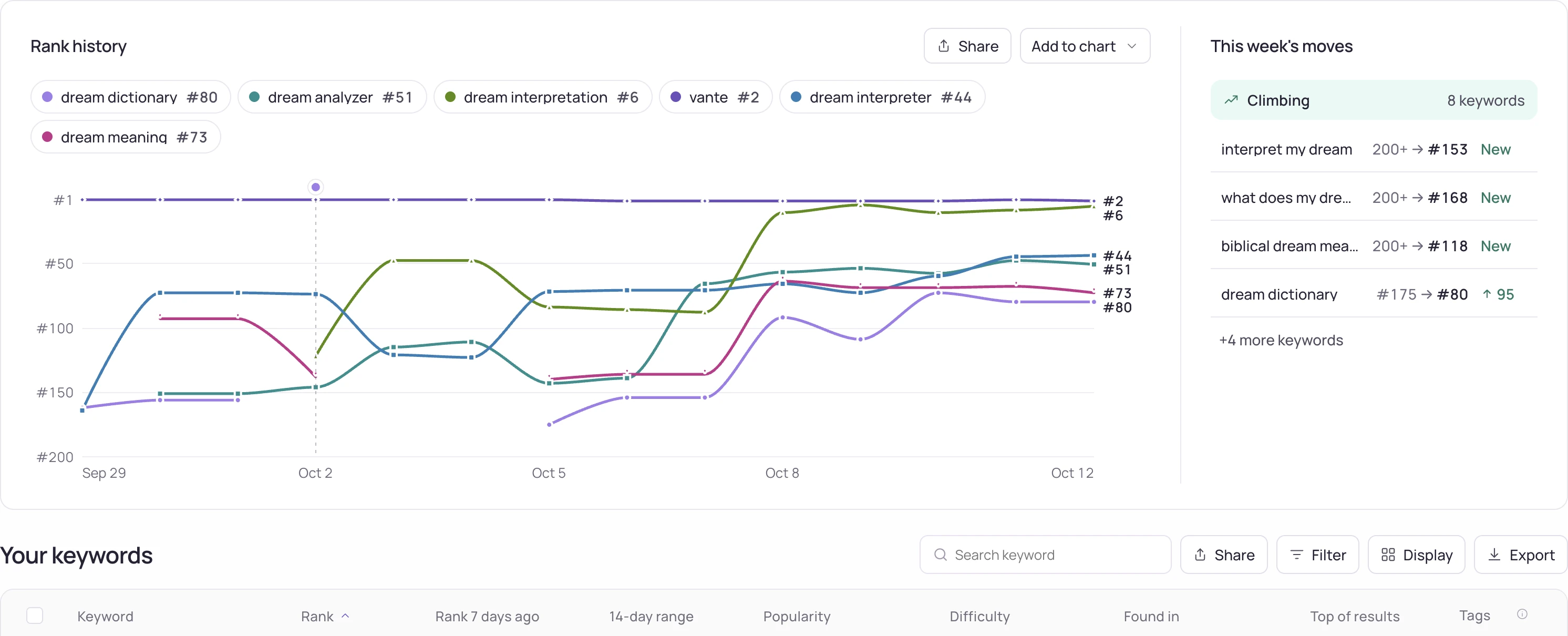
- Report the largest relevant gains and losses with their competing results and release context. Separate brand and generic terms, and distinguish new tracking coverage from changes in existing terms.
- Add acquisition outcomes where available, with their source definitions. Finish with a short action list containing an owner, expected evidence and review date for each item.
Worked interpretation
Illustrative review: the established generic cohort is stable, three terms fell in one storefront and a new release changed that locale's subtitle. The action is to inspect those terms and competing results; 'improve ASO' is not a sufficiently specific assignment.
Decision and next check
Carry unfinished investigations forward with their original hypothesis and new evidence. Close items when a decision is made, recording what supports it. Keep the summary short enough that the team can identify the next action without reading every row.
Related Storelift feature
Read App rank tracker for the available product data and its scope. Keep the app, storefront, period and measurement status with the observations used in your report.
Worked example and blank template
The values below are synthetic, not customer or product results. Open the example, replace its scope with your own data and keep the source export alongside it.
See this for your own app
Paste your store link, add your keywords. Rank, the apps above you and demand are measured every day.
Free plan: 1 app, 25 keywords in each of 2 storefronts, 30 days of history, no card, no end date. Pro is $20/mo.
Start free →