Investigation steps
- Choose seasonal terms that describe a real app capability. Record the relevant country and event period rather than applying one country's calendar to every storefront.
- Establish observations before the expected period and keep a stable comparison group of relevant year-round terms. Record missing historical data explicitly.
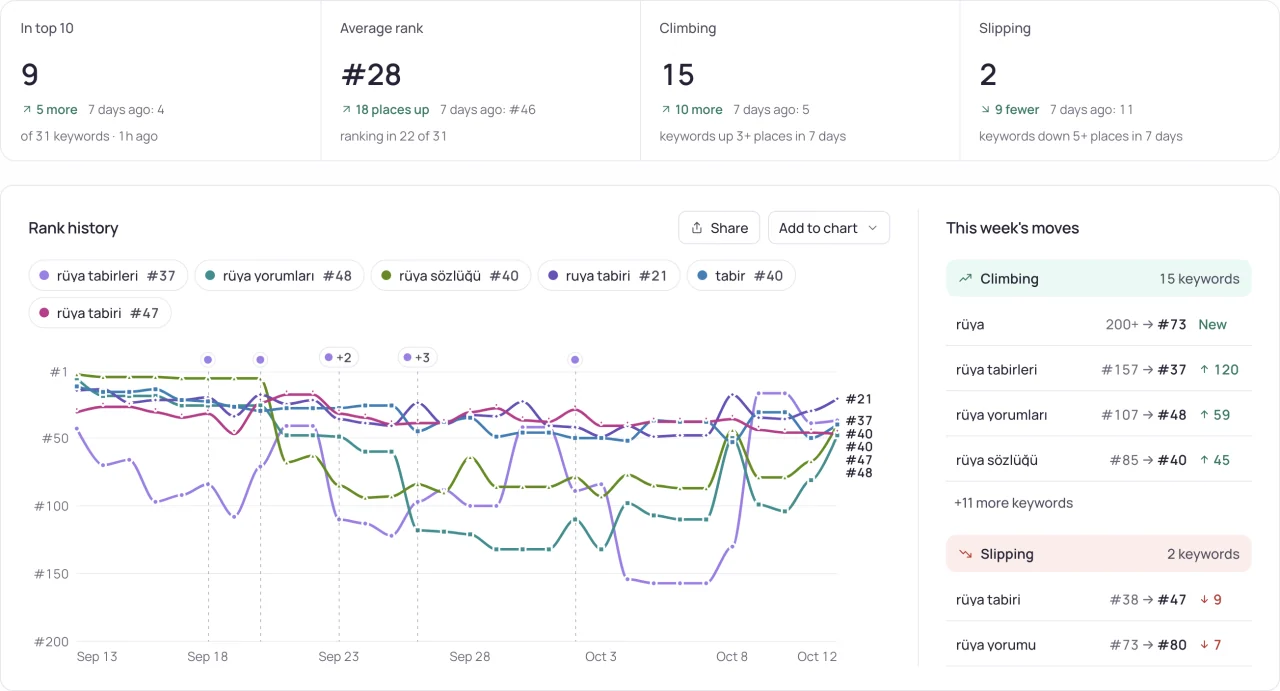
- Compare ranks, available demand signals and source-level acquisition over aligned periods. Record campaigns, releases and local events that could change the audience mix.
Worked interpretation
Illustrative case: a relevant seasonal term stays at rank 7 while search-source downloads increase during an event. That does not show a rank improvement. It suggests an acquisition change to investigate with demand and campaign context.
Decision and next check
Keep the seasonal set separate in reports and define when to review or retire it. Do not invent last year's baseline or infer exact search volume from autocomplete. Plan the next season using the dated observations gathered in this one.
Related Storelift feature
Read ASO keyword research for the available product data and its scope. Keep the app, storefront, period and measurement status with the observations used in your report.
See this for your own app
Paste your store link, add your keywords. Rank, the apps above you and demand are measured every day.
Free plan: 1 app, 25 keywords in each of 2 storefronts, 30 days of history, no card, no end date. Pro is $20/mo.
Start free →