Investigation steps
- Confirm that the app and its intended features are available in the target market. Save the current listing and the language shown for the chosen storefront.
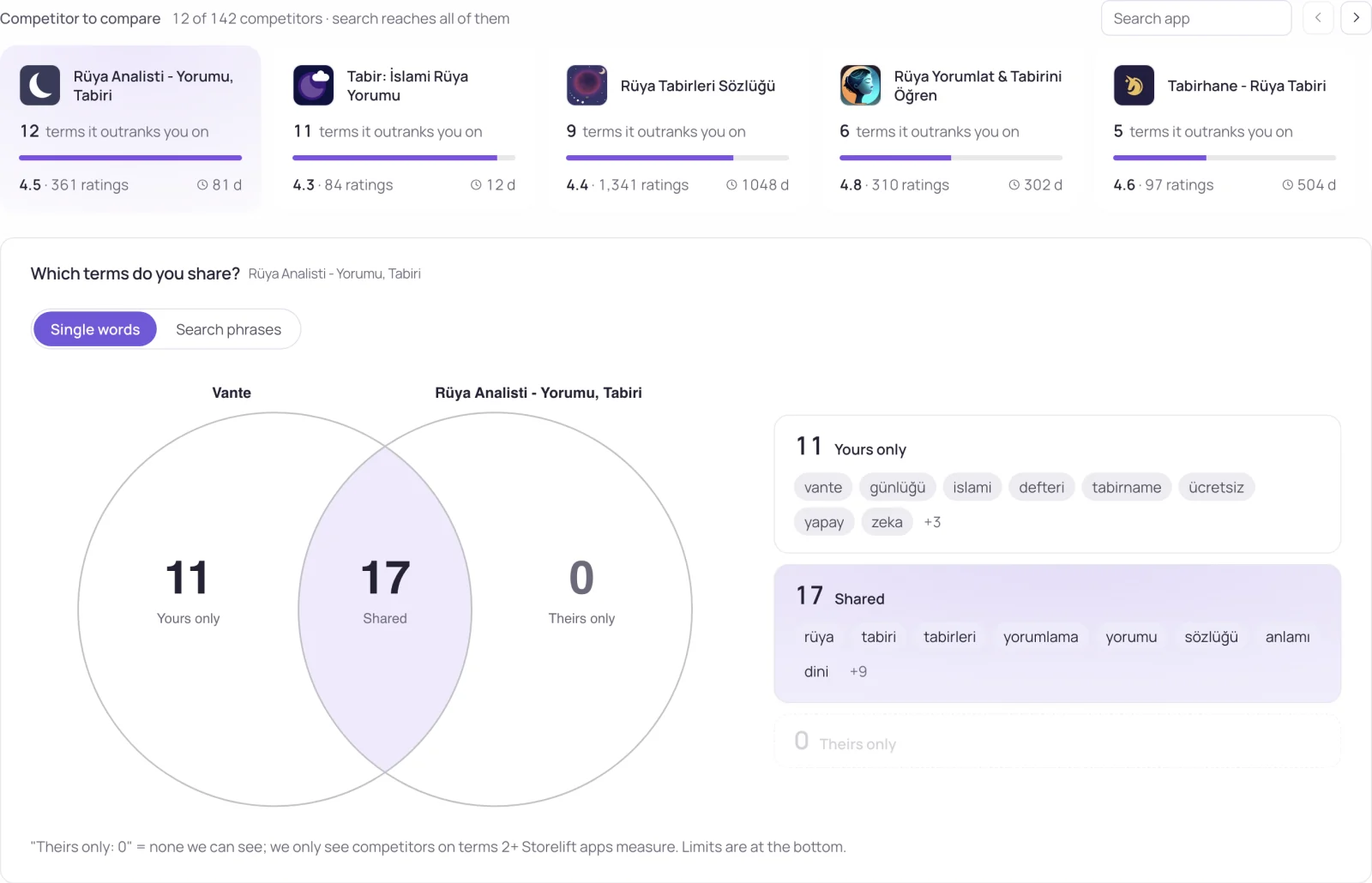
- Research locally relevant phrases and record their intended app tasks. Measure the local results instead of carrying over ranks or demand assumptions from the home market.
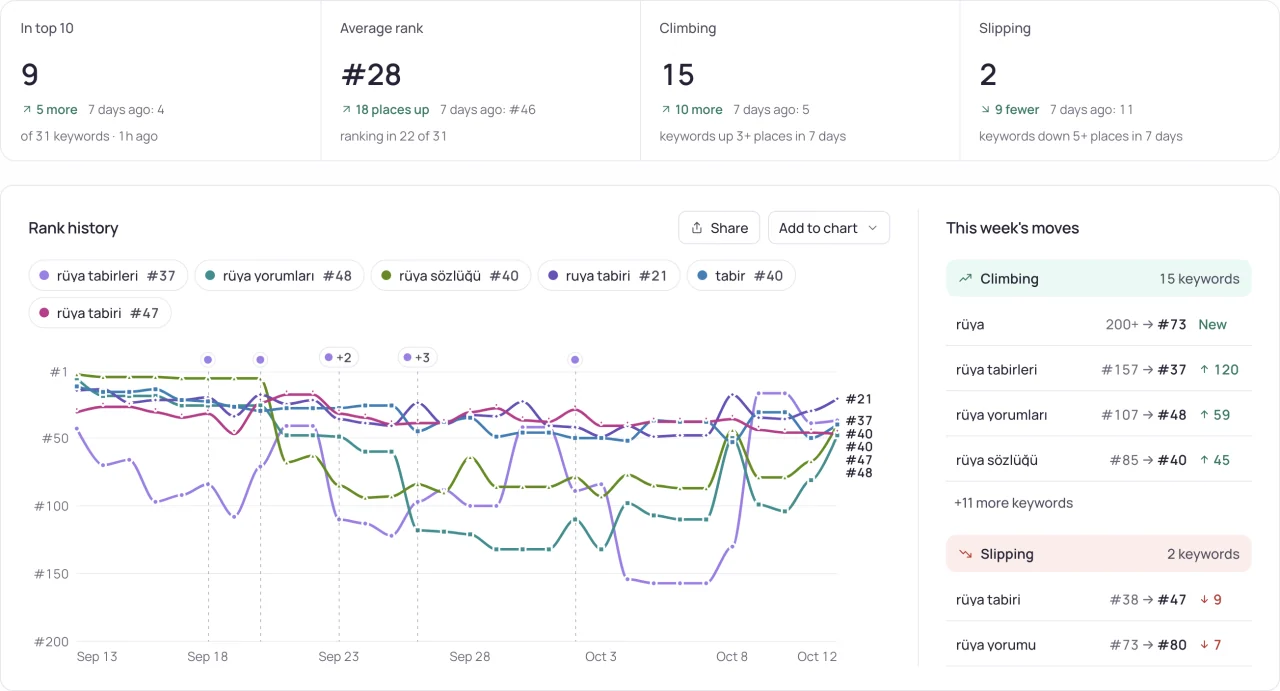
- Record measurement dates, observed ranks, missing observations and the competing apps. Add source-level acquisition data if available and mark unavailable metrics as unknown.
Worked interpretation
Illustrative case: the home-market term ranks 9, while a locally researched phrase is outside the measured range in the new country. The home-market position is not the new market's starting rank; the local observation is.
Decision and next check
Keep the baseline with the launch date, first planned listing changes and a fixed review window. Compare later results against that record. Separate localization work from product availability and campaign changes so the launch report explains what actually happened.
Related Storelift feature
Read ASO localization for the available product data and its scope. Keep the app, storefront, period and measurement status with the observations used in your report.
Worked example and blank template
The values below are synthetic, not customer or product results. Open the example, replace its scope with your own data and keep the source export alongside it.
See this for your own app
Paste your store link, add your keywords. Rank, the apps above you and demand are measured every day.
Free plan: 1 app, 25 keywords in each of 2 storefronts, 30 days of history, no card, no end date. Pro is $20/mo.
Start free →