Investigation steps
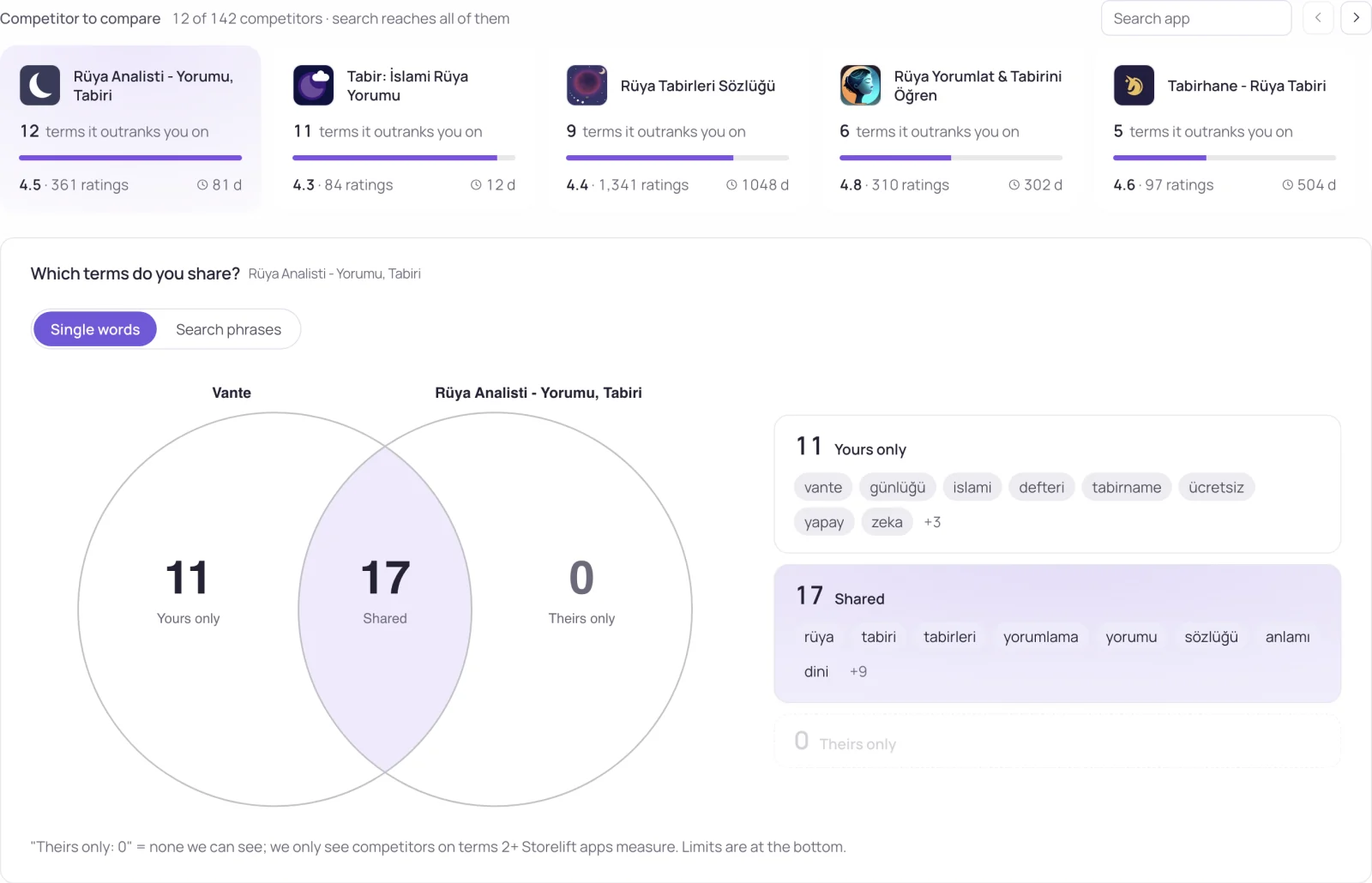
- Create an app-level scope table with platforms, storefronts, tracked terms and successful measurement coverage. Keep paused or newly added tracking separate from established history.
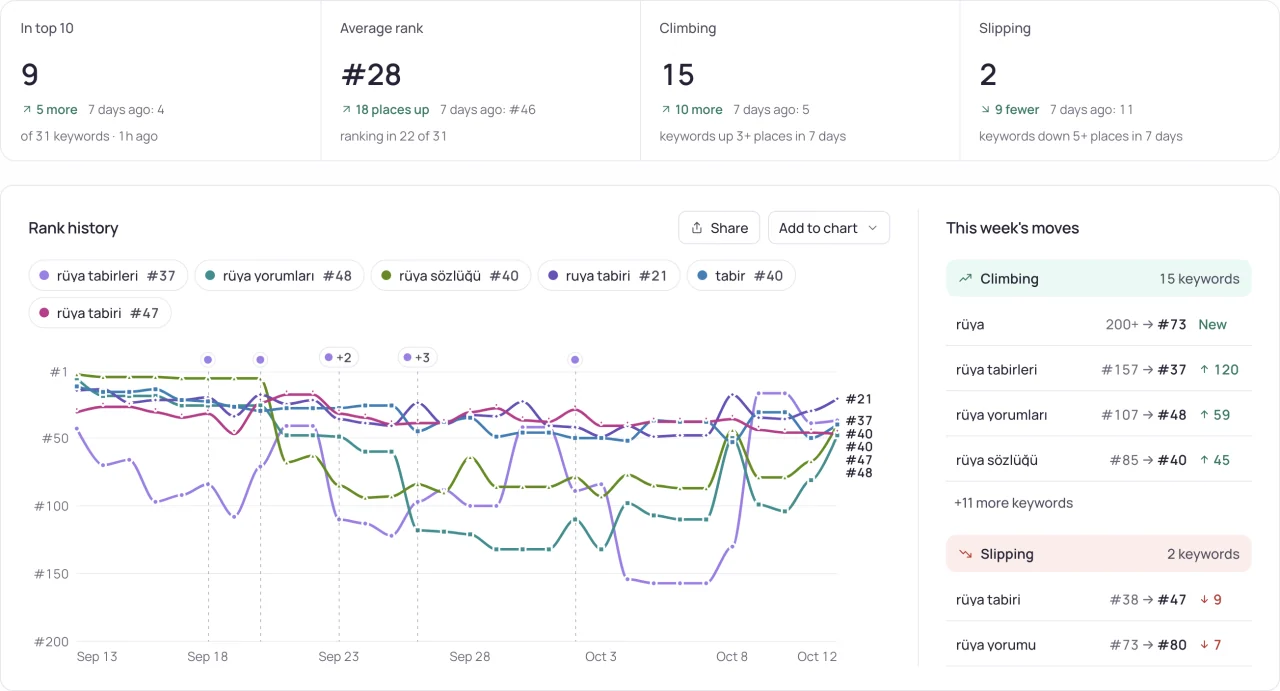
- Summarize changes within each app's fixed groups. Show outside-range and missing observations alongside numerical positions; do not hide a poorly measured app in an aggregate average.
- Prioritize investigations by relevance, magnitude and available evidence. Add acquisition outcomes only at the scope the source supports, keeping account-level figures outside app-level comparisons.
Worked interpretation
Illustrative case: one app has hundreds of tracked terms and another has twenty. A portfolio-wide mean mostly reflects the larger set. Separate app summaries can reveal a significant decline in the smaller app that the overall mean barely shows.
Decision and next check
Assign the next action at app and country level, with a named owner and evidence to collect. Keep the portfolio view as navigation into those decisions. Do not rank apps by incompatible averages or divide shared account revenue among them by assumption.
Related Storelift feature
Read App rank tracker for the available product data and its scope. Keep the app, storefront, period and measurement status with the observations used in your report.
See this for your own app
Paste your store link, add your keywords. Rank, the apps above you and demand are measured every day.
Free plan: 1 app, 25 keywords in each of 2 storefronts, 30 days of history, no card, no end date. Pro is $20/mo.
Start free →